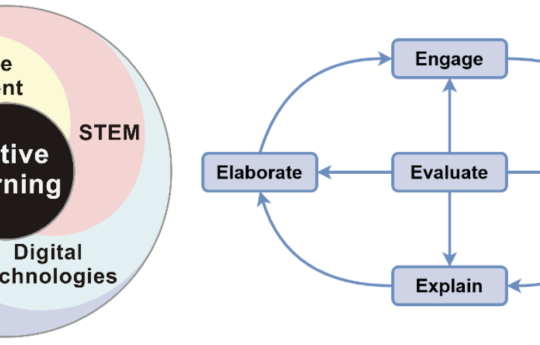
STEM play (STEM= Science, Technology, Engineering, and Math) promotes critical thinking by promoting questions, observations, and conclusions while improving problem-solving abilities through patience and perseverance. Participating in STEM activities for preschoolers also stimulates creativity and imagination, encouraging children to experiment with different building and design methods.
They may sound fancy, as if they must be outsourced to a STEM enrichment center, but the truth is that it is simply about exploring, experimenting, and discovering the world through hands-on activities that pique our children’s curiosity and creativity, and there are so many simple play ideas that you can do together at home that are fun, engaging, and fulfill all of the STEM requirements.
Why STEM Matters in Early Childhood
Students are encouraged to ask questions and express their concerns in order to develop a lifelong love of learning. The early exposure to Pre K STEM activities cultivates an engaging mindset, making it easier for the pupils to accept new learning. This enables individuals to attain academic success and make judgments by absorbing critical knowledge.
| STEM Geography | |
| Science | Young children are natural scientists. They observe, question, and experiment without prompting. Science exploration in early childhood builds on this instinct by encouraging children to explore the world through their senses. STEM preschool activities might include mixing colours, watching what floats or sinks, or growing a plant. These experiences teach cause and effect, observation skills, and an understanding of natural systems. |
| Technology | In early childhood, technology goes far beyond screens. It includes using magnifying glasses, digital thermometers, or even simple tools like rulers. Introducing technology in thoughtful, age-appropriate ways helps children become comfortable with problem-solving tools and digital literacy. |
| Engineering | Engineering encourages children to design building structures. Whether it’s constructing a bridge from blocks or figuring out how to make a paper airplane fly farther, engineering for kids fosters innovation, creativity, and persistence. These STEM crafts for preschoolers support spatial awareness and fine motor skills. |
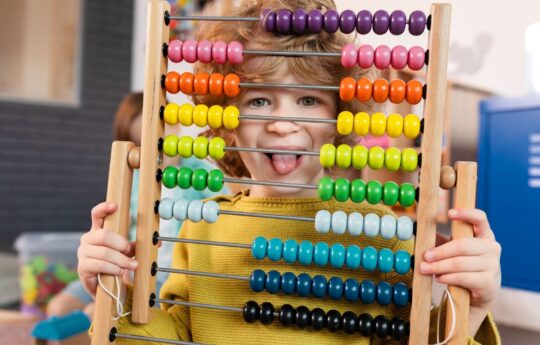
| Mathematics | Early numeracy isn’t just about numbers; it’s about patterns, shapes, sizes, and relationships. Early numeracy activities might involve sorting objects by size, counting out loud, or playing with puzzles. These help children develop logical thinking and a strong foundation for future numeracy. |
A longitudinal study discovered that high-quality early childcare and education (ECE), including cognitive stimulation and caregiver response, was associated with higher STEM children’s activities achievement in late elementary and high school, particularly among students from low-income families [1].
Easy STEM Activities Preschoolers Can Do at Home
These children’s minds were also undergoing a complex internal process. One that is difficult to notice, leading adults to underestimate young children’s current abilities. Many individuals feel that STEM learning does not begin until children are older, and that exposure to concepts in early childhood (birth to 8 years) is only for setting the groundwork for preschool STEM activities learning later. So, take doing science experiments easy!
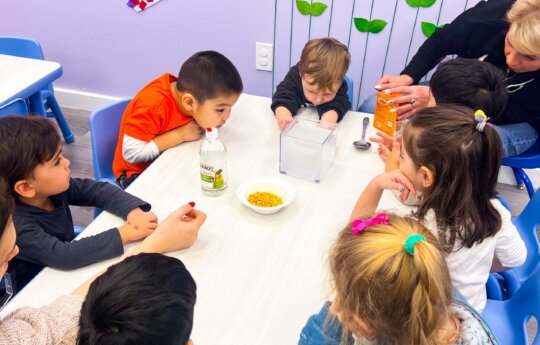
Content Experiment 1: Magic Milk Color SymphonyMaterials NeededProcedureLearning OutcomeExperiment 2: Rainbow in a GlassMaterials You’ll NeedSteps to FollowThe Science Behind ItExperiment 3: Invisible Ink with Lemon JuiceWhat You NeedMethodEducational AspectExperiment 4: Dancing RaisinsItems RequiredHow to Do ItWhat HappensConclusion: Little Scholars and Home ScienceRelated Insights Welcome to the exciting world of DIY science experiments for kids! … DIY Science Experiments for Preschoolers
Everyday Science Exploration
The best way for preschoolers to comprehend sensory science is when it is linked to their vision and touch. The use of everyday hands-on experiments allows them to develop their skills of changing observation, prediction making and very simple outcome describing.
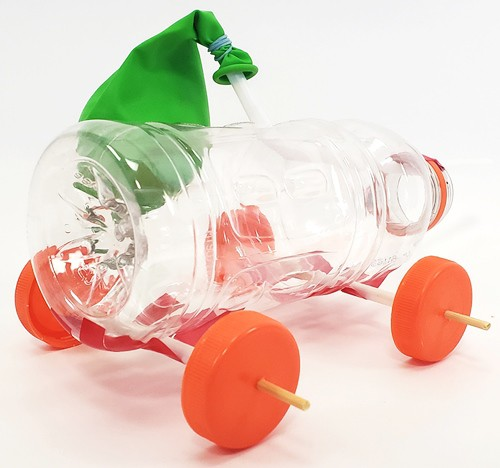
Activities to try at home:
- Sink or float investigations: Fill a bowl with water and test objects like spoons, leaves, coins, and plastic toys. Ask children to guess first, then talk about why some items sink and others float.
- Color mixing experiments: Use paint, food coloring, or bath toys to mix primary colors and observe how new colors form. Encourage children to name the colors and describe the changes they see.
- Ice melting comparisons: Place ice cubes in different locations (sunlight, shade, inside a bowl, on a plate) and check which melts fastest. Discuss temperature and time in simple terms.
- Shadow exploration: Trace shadows at different times of day or move a flashlight closer and farther away. Help children notice how light affects size and shape.
- Plant growth observation: Plant seeds in clear containers so roots are visible. Measure growth over days and talk about what plants need to survive.
Through these STEM preschool activities, scientific thinking is introduced in a non-pressured way. The intention is to develop the skills of observing, comparing and explaining what is happening.
Early Math Through Play
The foundation of mathematics is built upon the recognition of quantity, sequence, and patterns. If early math learning is integrated into games, kids will acquire self-assurance and reasoning skills even before the official teaching starts.
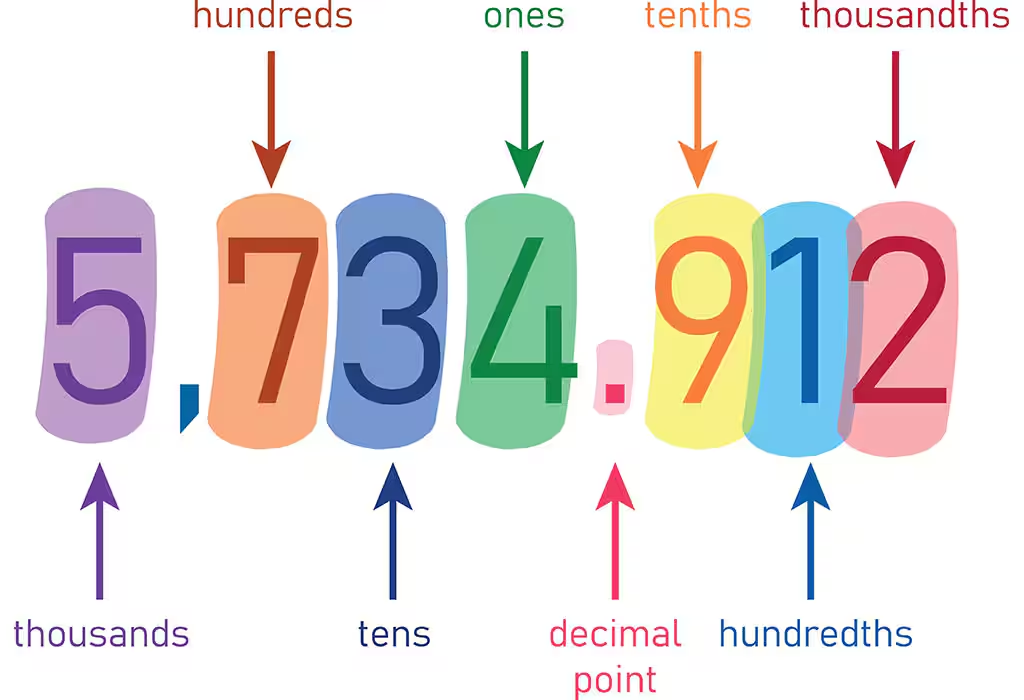
Activities to try at home:
- Counting during routines: Count steps while climbing stairs, snacks on a plate, or toys during cleanup to reinforce one-to-one correspondence.
- Sorting and classifying: Group objects by size, color, shape, or texture, then talk about how items are similar or different.
- Board games with numbers: Use games that include dice, spinners, or numbered spaces to practice counting forward and recognizing numerals.
- Measuring while cooking: Let children scoop, pour, and level ingredients while using words like more, less, full, and empty.
- Pattern creation: Build repeating patterns using blocks, beads, or household items and encourage children to extend or copy the pattern.
Kids learn to see math as something that they encounter daily through preschool STEM activities experiences. Little by little, they develop a number sense which will be their support in learning in school later on.
Building & Engineering Challenges
Engaging in construction play not only introduces basic engineering ideas but also teaches kids to plan, conduct tests, and do problem solving skills. In addition, it develops children’s hand-eye coordination and promotes their ability to overcome difficulties.
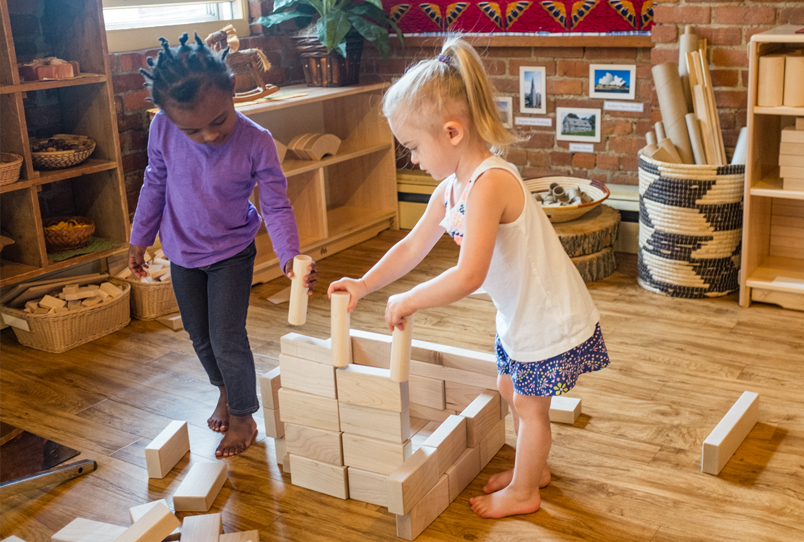
Activities to try at home:
- Tower-building challenges: Use blocks or recycled materials to build the tallest tower possible, then adjust the base to improve balance.
- Bridge construction: Create a bridge using cardboard and tape to span two chairs or boxes, testing which designs hold more weight.
- Ramp experiments: Build ramps at different angles and roll cars or balls down them to compare speed and distance.
- Open-ended LEGO building: Allow free building without instructions and ask children to explain what their structure does or who it’s for.
- Design-and-rebuild tasks: Invite children to rebuild a structure after it collapses, encouraging them to reflect on what could work better.
Engineering challenge teaches children that mistakes can and should happen for learning. And each new build helps strengthen problem-solving skills, creativity, and confidence.
We’ve compiled even more Pre-K science experiments that would inspire curiosity:

Content Why Science Matters in Early LearningSimple and Engaging Pre-K Science ExperimentsLittle Scholars NYC: Building Curiosity Through ExplorationSafe and Fun Classroom ExperimentsConclusion: Raising Curious Thinkers Any science experiment for preschoolers might be an area where the kids do not entirely understand the scientific ideas but this is nevertheless a great method to start the building … Pre-K Science Experiments: Inspiring Curiosity Through Play
How Little Scholars NYC Integrates STEM Daily
At Little Scholars NYC, daily STEM education is provided by the educators through intentional planning, guided facilitation, and teaching practices that serve the needs of the children. During structured play and routine STEM activity for preschool in the classroom, teachers bring in STEM concepts using specific prompts and modeling techniques to support inquiry, experimentation, and early problem-solving skills.
In the Preschool Program, the instruction is bilingual, thus language development is supported together with STEM learning. Educators purposefully introduce core concepts in both languages, thereby strengthening the vocabulary pertaining to numbers, measurement, observation, and cause-and-effect.
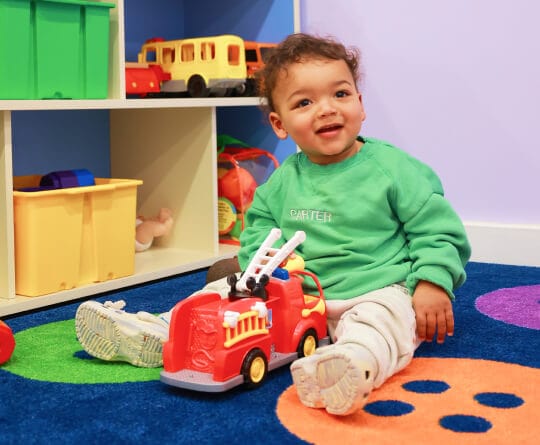
Moreover, the educators at Little Scholars are always watching, guiding, and changing the PreK STEM activities to suit every child’s developmental stage. The use of open-ended materials, group activities, and physical challenges among the children are all meant to promote interaction among peers, thinking critically, and being patient until the end of the challenge.
Moreover, the educators at Little Scholars are always watching, guiding, and changing the PreK STEM activities to suit every child’s developmental stage. The use of open-ended materials, group activities, and physical challenges among the children are all meant to promote interaction among peers, thinking critically, and being patient until the end of the challenge.
Play-Based STEM & Creative Crafts
Little Scholars NYC integrates STEM teaching into the pre-planned play-based learning activities where these activities gradually develop children’s cognitive skills, hand-eye coordination, and rudimentary problem-solving abilities. With the help of the teacher and the use of different materials, the children’s creative thinking is powered up through the introduction of STEM concepts by guiding kids to explore, experiment, and create the crafts.
Safe, Stimulating Classrooms
The Little Scholars NYC classroom environments are purposefully built to ensure kids can explore while at the same time keeping safety as a priority. The different teaching areas have kids’ materials, zones for each activity, and furniture that allows both solo and group learning to take place. Environmental design (look at our places in Brooklyn and Manhattan) puts sensory involvement, easy access, and emotional safety at the top of the list thus allowing kids to engage in PreK STEM activities during the entire school day.
Conclusion
The very first STEAM activities for preschoolers‘ experiences provide preschoolers with the necessary abilities to investigate, inquire, and comprehend their surroundings. Little Scholars NYC merges carefully planned classrooms, bilingual teaching, and learning through play to bring about STEM. Through active participation in scientific experiments, engaging in engineering problems, and playing math games, children are, in fact, developing their curiosity, critical thinking, and problem-solving skills in a stress-free atmosphere.
Are you excited to witness STEM for preschoolers in a real-life situation? Make a tour appointment today, and you will get a chance to see how Little Scholars NYC organizes the playful and daily STEM instruction as a part of young learners’ nurturing. Come to our Brooklyn or Manhattan campus, and you will be amazed by how much difference the early hands-on learning can make.
FAQ
What are simple STEM activities for preschoolers at home?
Everyday items can be used for simple STEM activities for preschoolers like counting objects, mixing colors, performing sink-or-float experiments, and building with blocks or recycled materials. These activities stimulate children’s observation, experimentation, and creativity.
Why is STEM important in early childhood?
STEM education fosters fine motor development and analytical thinking, skills to solve problems, and inquisitiveness from the very beginning. The children grow those skills like a base for their future learning in STEM through the process of early exposure.
How can parents support STEM learning in NYC apartments?
Small-scale, low-mess STEM activities preschool like tabletop experiments, LEGO or block construction, and pattern-based games can be used by parents. The integration of STEM for preschoolers into everyday life makes learning available even in small spaces.
What makes a STEM activity developmentally appropriate?
An activity in STEM that is suitable for a particular stage of development fits to the child’s age, abilities, and focus duration and at the same time, it enables the child to discover new things. It leads the child and at the same time does not burden him/her, thus, the child learns by playing and experimenting.
How do STEM projects support problem-solving skills?
STEM projects motivate kids to apply their imagination, see the results, and change their plans. The trial-and-error method of teaching helps to develop the character trait of persistence, the skill of critical thinking, and the ability to reason logically.
What STEM materials are safe for preschoolers?
Non-toxic blocks of a considerable size, washable paints, water-based experiments, and tools like rulers or magnifying glasses that are suitable for children’s ages are all examples of safe materials. Moreover, the materials should not contain anything that could choke a child or have sharp edges.
How does a school’s STEM curriculum prepare children for kindergarten?
An organized STEM for preschoolers curriculum creates early math, observation, and engineering skills and at the same time encourages and allows the children to work together. Kids come to kindergarten full of self-confidence, able to solve problems, and having the basic knowledge of different STEM fields.
References
- https://pubmed.ncbi.nlm.nih.gov/37326529/
- https://www.bigbangacademyhk.com/blog-en/stem-experiment
- https://www.firstcry.com/intelli/articles/learn-about-the-place-value-system-with-activities/?srsltid=AfmBOoquoIgHD4Y-Nyq8QC7BYqthpQ5iy60II97VuWOCI0nPlPpXlGNo
- https://www.communityplaythings.com/resources/articles/building-21st-century-skills-block-by-block