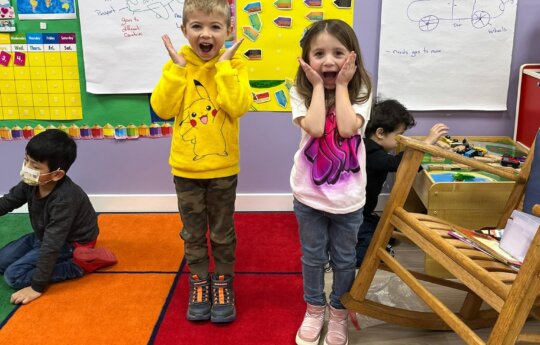
The period between September and May represents an important time for Brooklyn families whose children will begin kindergarten because it leads to their first experience of kindergarten anxiety. The transition from home-based activities to formal school settings causes children to experience increased distress which stems from their deep connection to their caregivers.
However, how to help a child with separation anxiety? Parents who establish structured daily patterns and prepare their children for school while creating collaborative relationships with educational institutions will help their children succeed during this transition period.
Why separation anxiety often peaks before kindergarten
Infants show their first symptoms of kindergarten anxiety between 7 and 8 months of age. The child in this stage develops facial recognition skills which enable them to form deeper emotional connections with their family members who require their constant presence.

Mary Ainsworth studied how children experience stronger separation anxiety when they reach complete attachment development while their independence development remains incomplete [1].
Children need time to build trust in new environments before they become ready to leave their parents. The process of kindergarten separation anxiety starts to disappear when children experience separation from their parents because each separation helps them build self-assurance.
What changes feel overwhelming to children
The research shows that preschool children who experience kindergarten anxiety need more than one event to develop this condition. The research shows that distress levels rise when multiple developmental requirements change at the same time. According to attachment theory formulated by John Bowlby young children depend on environmental stability to maintain their emotional safety [2]. When a child experiences sudden changes to all their known environments the child will show increased activation of their attachment system.

Children need to spend time away from their main caregivers throughout the day because they require consistent time away from their main caregivers. Children need to adapt quickly to new adults who hold power because they need to learn how to work with their peer group.
Several contextual factors commonly amplify stress during this period:
- Familiar Routines: replacement of flexible home routines with fixed institutional schedules.
- Caregiver Proximity: extended physical distance from primary attachment figures.
- Sensory Load: heightened stimulation from noise, movement, and frequent school transitions.
- Independence Demands: expectations for self-management that exceed emotional self-regulation capacity.
Developmental psychologist Jerome Kagan demonstrated that temperament influences how strongly children react to novelty [3]. Behaviorally inhibited children experience unfamiliar environments as biologically arousing rather than merely new. The brain processes multiple identical adjustments as threats which lead to separation anxiety kindergarten responses.
Which behaviors parents should watch first
The first reactions which people display when they see separation from others serve as their main method to express their thoughts and feelings. Research summarized in developmental frameworks such as those presented by Laura E. Berk shows that children often express emotional strain via behavior rather than verbal explanation [4].
The child uses emotional control training to develop coping skills which will help him restore normal conditions and maintain contact with others. Clinical concern arises only when distress remains severe, persists beyond several weeks of adjustment, or begins to impair social participation, learning engagement, or daily family functioning.
Interested parents should read further on preventing overstimulation in toddlers.
Content What is Overstimulation in ToddlersWhat Causes Overstimulation in ToddlersTypical Scenarios Leading to OverstimulationSigns of Overstimulation in ToddlersCommon signsLess-known symptomsEffects of Overstimulation in ToddlersShort-Term EffectsLong-Term EffectsHow to calm an overstimulated toddler1. Create a calm environment2. Routines & transitions3. Limit screens & high-stimulus inputs4. Quiet time & sensory breaks5. Be responsive to individual needs6. Align with … Preventing Overstimulation in Toddlers
How parents can reduce anxiety at home
Parents can support their child by establishing consistent routines, gradually exposing them to separations, and providing reassurance that strengthens emotional security. In detail:
| Strategy | Description | Practical Example | Expected Outcome |
| Predictable Morning Routine | Consistent sequence of activities before leaving home reduces uncertainty. | Wake up, dress, breakfast, backpack check, goodbye ritual. | Children anticipate each step, lowering stress and improving cooperation. |
| Short Practice Separations | Gradual, brief separations help children learn that parents return. | Leave the room for 5-10 minutes, gradually increasing duration. | Children build trust in caregiver availability and confidence building. |
| Visual Schedule | Use charts or pictures to outline daily activities. | Display morning steps or school day timeline. | Supports memory and reduces anxiety by clarifying expectations. |
| Reassurance and Positive Framing | Encourage children with calm statements and praise for effort. | “You will have fun at school, and I’ll be back after lunch.” | Reinforces security and builds resilience to temporary separation. |
By using this, children gain independence, and the capacity to navigate social environments with reduced anxiety, making the school transition a positive growth milestone.
Build a predictable morning routine
The implementation of a consistent morning schedule helps to decrease mental effort while maintaining emotional control. Children who understand their upcoming schedule can concentrate on handling their emotional responses instead of worrying about unexpected events.
The day should start with fixed wake-up times, which should be followed by scheduled times for breakfast and personal hygiene before students prepare their school items. The program should include a short farewell ceremony.
Practice short separations before school starts
The process of teaching children about temporary parental absences requires them to experience separation from their parents in increasing levels of intensity. The process starts with parents leaving home for brief periods which they should extend while showing their children calmness and confidence building.
The first moment of separation requires parents to give their children comfort but they should not stay for too long because this behavior will make their children more upset. The children learn to trust themselves and you through their repeated experiences which also teach them self-soothing abilities.
Which separation anxiety activities work best
Not all separation anxiety activities are equally effective for helping children manage the associated feelings. The combination of predictable elements with gradual exposure and transition support delivers the most effective results. Developmental psychologists recommend two evidence-based methods which consist of play-based role practice and visual schedules.
Play-based role practice
Research on therapeutic play interventions demonstrates that structured play activities enable children to explore their fears through symbolic play which helps them develop emotional expression skills and practice safe coping skills in a protected space [5].
Children who participate in guided play activities which replicate actual stress situations and learn social‑emotional skills experience lower levels of kindergarten anxiety indicators. The process helps children practice regulating emotions, identifying feelings, and solving social problems.

Role-play in real situations brings together multiple activities which involve performing morning routines through toy play and using puppets to enact school drop-off scenes and storytelling which features characters who exit and return. The exercises provide more than entertainment because they assist the child in developing internal control through their repeated experiences of separation which leads to safe return in this particular environment [6].
Visual schedules and comfort objects
Visual schedules provide predictability which directly targets the cognitive uncertainty that fuels kindergarten anxiety. Research across pediatric settings including education shows that visual supports which include pictures and icons and timelines that outline upcoming events reduce stress by externalizing the sequence of what will happen next [7]. Schedules have been shown to improve engagement and reduce distress in settings where children face routines.
The process of blending different timetables with physical materials establishes a foundation of emotional stability which people need to navigate periods of transformation. Education resources note that using familiar items like a small blanket can ease school transitions because children can access an emotional bridge back to their attachment figure when separated.
How a supportive daycare environment eases transitions
Starting daycare or kindergarten represents one of the first major social transitions in early childhood. The research findings from developmental psychology show that children learn to adapt to separation because the caregiving environment determines their speed of adjustment. The following information provides further detail about the situation:
| Environment Element | What It Looks Like in Practice | Developmental Purpose | Impact on the Child |
| Consistent Caregivers | Stable staff assignments and familiar faces. | Supports attachment transfer and trust formation. | Children feel emotionally secure more quickly. |
| Predictable Daily Structure | Clear routines for arrival, meals, play, and rest. | Reduces uncertainty and cognitive overload. | Lower anxiety and smoother separation. |
| Emotion Coaching | Teachers label feelings and validate experiences. | Builds emotional literacy and regulation skills. | Children learn to manage distress constructively. |
| Gradual Social Integration | Small-group activities and guided peer interaction. | Supports confidence building without overwhelm. | Increased participation and independence. |
A supportive daycare setting reduces stress by using emotional responsiveness, predictable structure, and opportunities for gradual engagement, allowing children to transfer feelings.
Why whole-child care matters during change
The process of transitions creates multiple effects which include changing human behavior and all human emotional states and social skills and cognitive functions and body health. Whole-child care recognizes that learning cannot occur effectively when emotional security is compromised. The program assists children in emotional regulation through its support and play and movement exercises and communication practice and rest periods.
Developmental research shows that children adapt best when caregivers respond not only to preschool readiness but also to emotional signals such as fatigue, withdrawal, or overstimulation. Sensitive adult responses during periods of change help children see new environments as safe spaces instead of dangerous areas. Emotional safety becomes the foundation upon which curiosity, peer engagement, and learning gradually emerge.
How Little Scholars approaches emotional and social development
The Preschool 3K Program provides emotional learning through its daily activities which it maintains as its core educational method. Little Scholars NYC implements social and emotional development through its daily activities which staff members use to engage students. Teachers establish connections with students during their arrival time because they believe that students need personal contact to succeed in their daily drop-off routines.
The process teaches children how to interact with their peers through modeling and gentle coaching while they learn sharing skills and parent communication abilities and how to play with others in their group. Teachers track each student’s emotional state and their speed of adapting to new situations which enables students to learn new skills at their own pace instead of needing to become self-sufficient. The approach enables students to develop self-assurance while the program advances according to their evolving skills.
Daycare facilities design their spaces to create a home-like environment which enables children to feel comfortable. The methods of communication with families and the established caregiving patterns and the use of familiar routines enable children to sustain stability throughout different environments. The process enables children to develop a sense of safety through repeated experiences of secure separation from their parents and their joyful reunions, which results in stronger emotional resilience and better social skills.
What parents should not do during drop-off
The process of separation gets established through the drop-off routine. Children interpret parental actions as emotional signals because they use parental behavior as their main source of emotional information which they understand through the complete feelings. The departure process establishes a peaceful and predictable pattern which enables a child to move from needing transition support to developing trust in their new caregiving environment.
Parents should avoid several common patterns that prolong distress:
- Prolonged goodbyes: lingering increases anticipation anxiety rather than easing it.
- Leaving without saying goodbye: sudden disappearance may undermine trust and intensify future anxiety.
- Returning repeatedly after leaving: reappearing reinforces protest behavior as an effective strategy to delay separation.
- Negotiating or bribing: shifting expectations during emotional moments creates uncertainty instead of reassurance.
- Displaying visible worry: children often mirror parental emotional states more than verbal reassurance.
- Changing routines daily: inconsistent drop-off rituals prevent children from forming predictable emotional expectations.
A brief, warm, and confident goodbye communicates safety more effectively than extended reassurance. Consistency, rather than intensity of comfort, is what supports adjustment.
Final point before the first week
The period before kindergarten begins to show that separation anxiety represents a normal stage of emotional growth which proves attachment to caregivers. How to help a child with separation anxiety? With preparation, consistent routines, and supportive caregivers, most children gradually replace fear with confidence building and curiosity.
The Little Scholars NYC team provides information about our structured Preschool Program schedules together with our whole-child approach which helps children make a smooth transition from their first day of school:
Preschool Program
3K Program
FAQ
What causes separation anxiety before kindergarten?
Kindergarten anxiety arises from the combination of strong attachment bonds and a developing sense of independence. Major transitions, unfamiliar routines, and new social environments can intensify this natural response.
How long does kindergarten separation anxiety usually last?
For most children, kindergarten separation anxiety gradually decreases within a few weeks to months as they adjust to school routines. Each successful separation helps build confidence and emotional resilience.
What signs show normal anxiety versus a bigger problem?
Normal separation anxiety kindergarten response includes brief distress, clinginess, or mild somatic complaints that ease after reassurance. A larger problem may involve persistent, intense anxiety that interferes with daily functioning or school participation.
Which routines help a child feel safer before school starts?
Predictable drop-off routines, consistent wake-up times, and clear goodbye rituals provide structure and emotional security. Visual schedules and preparation for upcoming events also reduce uncertainty.
Do separation anxiety activities really help?
Yes, separation anxiety activities like play-based role practice and comfort objects help children rehearse separations safely. They support emotional regulation and increase trust in caregiver availability.
What should parents avoid at drop-off?
Avoid prolonged goodbyes, negotiation, or showing kindergarten anxiety, which can increase the child’s distress. Keep departures brief, calm, and confident to reinforce security.
When should a family ask a pediatrician or specialist for help?
Seek professional guidance if anxiety persists for months, is intense, or disrupts school attendance or daily life. Early consultation can identify underlying issues and guide supportive interventions.
References
- Ainsworth, M. D. S., Blehar, M. C., Waters, E., & Wall, S. N. Patterns of Attachment: A Psychological Study of the Strange Situation. 2015.
- Bowlby, J. Attachment and Loss. Volume I: Attachment. 1982.
- Kagan, J., Reznick, J. S., & Snidman, N. The Physiology and Psychology of Behavioral Inhibition in Children. 1987.
- Berk, L. E. Development Through the Lifespan (7th ed.). 2022.
- Zarra-Nezhad, M., Pakdaman, F., & Moazami-Goodarzi, A. The effectiveness of child-centered group play therapy and narrative therapy on preschoolers’ separation anxiety disorder and social-emotional behaviours. 2023.
- Zameliuk, M. Play Therapy as a Means of Overcoming Anxiety in Preschool Children. 2025.
- Koekemoer, G. C., Kuyler, A., Johnson, E., Van Zijl, K., Terblanche, A. J., Masuku, K. P., & Bornman, J. Reducing anxiety and enhancing confidence in paediatric patients through visual schedules. 2025.