This piece explores an important issue in childhood development: personal values. In general, personal values are the principles or ideas that matter most to us and guide our actions and relationships with others. In other words, they shape our personalities and identities, forming our character and determining how we see ourselves and how others see us.
Personal values are integral to kids for two main reasons. First, these principles influence their current choices and decisions, emotional responses, communication with others, and ability to overcome obstacles. Second, they serve as a kind of moral “savings account”—the future ethical and moral principles we build today by shaping them now. For example, it is through the respect and honesty we teach kids that they grow into respectful, honest adults.
7 Core Values Every Child Should Learn
Core values are very important in the development of a child’s emotional intelligence and ethical behavior. They form the basis of a child’s social and emotional development. Emotional intelligence refers to the ability of an individual to recognize, understand, and manage their own emotions and also those of others. However, emotional intelligence integrates with the core values of a child in a number of ways.
1. Honesty
An honest child tells the truth even when it is uncomfortable, admits mistakes, keeps promises, and does not take credit for things they did not do. Honesty is the foundation of trust in every relationship they will have.
2. Kindness
Kindness goes beyond being polite. A kind child notices when someone needs help and does something about it – checks on a friend who seems sad, includes a child who is left out, shares without being asked.
3. Responsibility
A responsible child completes tasks, accepts consequences without blaming others, and understands that their actions affect the people around them.
4. Fairness
Fairness means treating others equally and playing by the rules, even when it is not in your favor. A fair child considers other perspectives before making decisions and speaks up when something is unjust, not only when they are the one affected.
5. Respect
A respectful child listens when others are talking, does not touch things that belong to someone else, and accepts that people can look, think, and live differently without being wrong.
6. Courage
Courage is not the absence of fear. A courageous child tries new things, stands up for a friend who is treated badly, and admits a mistake in front of others.
7. Perseverance
A child who has learned perseverance understands that failure is part of the process. They try again, ask for help, and do not quit because something is hard the first time.
Identifying Core Values in Children
It is important to identify and facilitate the core values of children to help them become wholesome people. There are several effective ways to identify emerging values, including the administration of the assessment tools developed specifically for children.
A. Observing Choices and Behaviors
- Daily Interactions: Precious insights can be obtained by watching how children interact with peers, family members, and educators. Look at how they share, cooperate, and resolve conflict — it will say a lot about their values of fairness, empathy, and respect.
- Decision Making: Pay attention to choices that children make and that involve honesty, taking sides, or helping.
- Play Preferences: Understand why children choose this or that role to play. Being a caregiver is a popular role for girls, boys, teachers, doctors, animal rescue rangers, etc. Values can involve identity and career aspirations and the most important values the children admire.
- Feedback from Others: Getting regular reports from educators, school supervisors, and peers is important. Noticing consistent behaviors in different contexts.
B. Using Personal Values Assessment Tools
- Values Sorting Cards: The teacher gives the cards with the written values, such as kindness, honesty, courage, and asks children to sort them into two piles: values that are somewhat important or not important now, and those that are important now. In the process of completing the task, children can think about whether they really consider the values on the cards important and why.
- Story Responses: The teacher reads a story with a moral dilemma and asks the children what they would do in this situation. The answers help to understand what makes a child act in a certain way and what values are considered in the answer.
- Digital Apps and Games: There are applications designed to teach and assess values. They provide children with various scenarios and ask them to respond to them. With the help of games, a child can be involved in the learning process and receive feedback on the values after responding to the scenario.
- Questionnaires and Surveys: There are questionnaires and surveys adapted for children that consist of both direct and indirect questions about the value. The child is asked to respond and consider themselves to make a system of values.
- Drawing and Storytelling: The task is to ask the child to draw a picture or tell a story about such a thematic unit as ‘a person doing something important’. After that, one needs to evaluate what the child was drawing or describing.
Core Values to Teach: Morals for Kids
Teaching core values is vital as it has a significant role in the life of children, affecting their morals and social life. The following are essential morals and values with which every child must be nurtured, and their impact on the positive growth of the child.
Honesty
What It Looks Like in a Child: They tell you they broke something instead of hiding it. They do not copy a friend’s answer. They say “I don’t know” instead of making something up. They keep a promise even when it is inconvenient.
How to Teach It:
Model it yourself. Say “I made a mistake“ out loud when you do.
When your child tells the truth about something difficult, acknowledge the courage it took before addressing the behavior: “I’m glad you told me. That was hard to say.“
Do not set traps. If you already know they took the cookie, don’t ask if they did because it puts them in a position where lying feels like the easier option.
Kindness
What It Looks Like in a Child: They share a snack without being asked. They notice a classmate sitting alone and sit with them. They say something encouraging when a friend is upset.
How to Teach It:
- Name kind acts when you see them: “You gave Alice the bigger piece. That was kind.“ Naming it makes it real.
- Give children small acts of kindness to carry out, leaving a drawing for a neighbor, holding a door, helping set the table.
- Read books where kindness has consequences. The Lion and the Mouse is effective even for 3-year-olds.
Responsibility
What It Looks Like in a Child: They put their shoes away without being reminded. They tell you when they forgot their homework instead of inventing an excuse. They feed a pet consistently.
How to Teach It:
- Give age-appropriate tasks with real stakes: a plant to water, a pet to feed, a younger sibling to help. Responsibility needs something real to attach to.
- When they forget, let the natural consequence happen where safe. A forgotten water bottle is a thirsty afternoon, which is a more effective teacher than a lecture.
- Avoid rescuing. If you always cover for them, they never learn that their actions have outcomes.
Fairness
What It Looks Like in a Child: They split something equally even when they could take more. They follow the rules of a game even when losing. They object when someone else is treated unjustly, not only when they are.
How to Teach It:
Talk about fairness in stories and news: “Was that fair? What would have been fairer?“
Use turn-taking in everyday situations and name it: “You chose last time, so your brother chooses now. That’s fair.“
When a conflict arises, ask both sides to explain their perspective before deciding. Let them hear each other.
Respect
What It Looks Like in a Child: They wait for someone to finish speaking before they talk. They ask before borrowing something. They do not mock a classmate who is different from them.
How to Teach It:
- Hold the same standard for adults and children. If interrupting is not acceptable from your child, do not interrupt them.
- Name the specific behavior: “When I’m on the phone and you interrupt, that’s not respecting my time. Wait until I stop.“
- Respect for property is often easier to start with than respect for feelings; it is more concrete. “That’s your brother’s toy. You ask before you touch it.”
Courage
What It Looks Like in a Child: They try a new activity even though they might not be good at it. They tell a teacher when something is wrong even if it feels scary. They defend a classmate who is being left out.
How to Teach It:
Do not remove every obstacle. A child who is always rescued never discovers that they can handle hard things.
Normalize discomfort: “It’s okay to feel nervous. Nervous means something is new and important.“
Share your own moments of courage, when you were scared to do something and did it anyway.
Perseverance
What It Looks Like in Your Child: They try a puzzle multiple times instead of giving up. They practice a skill they are not yet good at. They come back to a project the next day instead of abandoning it.
How to Teach It:
Tell stories about people who failed before they succeeded in your own life, or in the lives of people they admire.
Praise effort, not result: “You kept trying even when it was hard“ lands differently than “You’re so smart.” Research by Carol Dweck at Stanford shows that effort-focused praise builds a growth mindset; outcome-focused praise makes children avoid challenges to protect their self-image.
Let them struggle for a bit before you help. Ask “What have you tried so far?“ before stepping in.
Practical Activities and Strategies to Teach Core Values
Role-Playing Scenarios
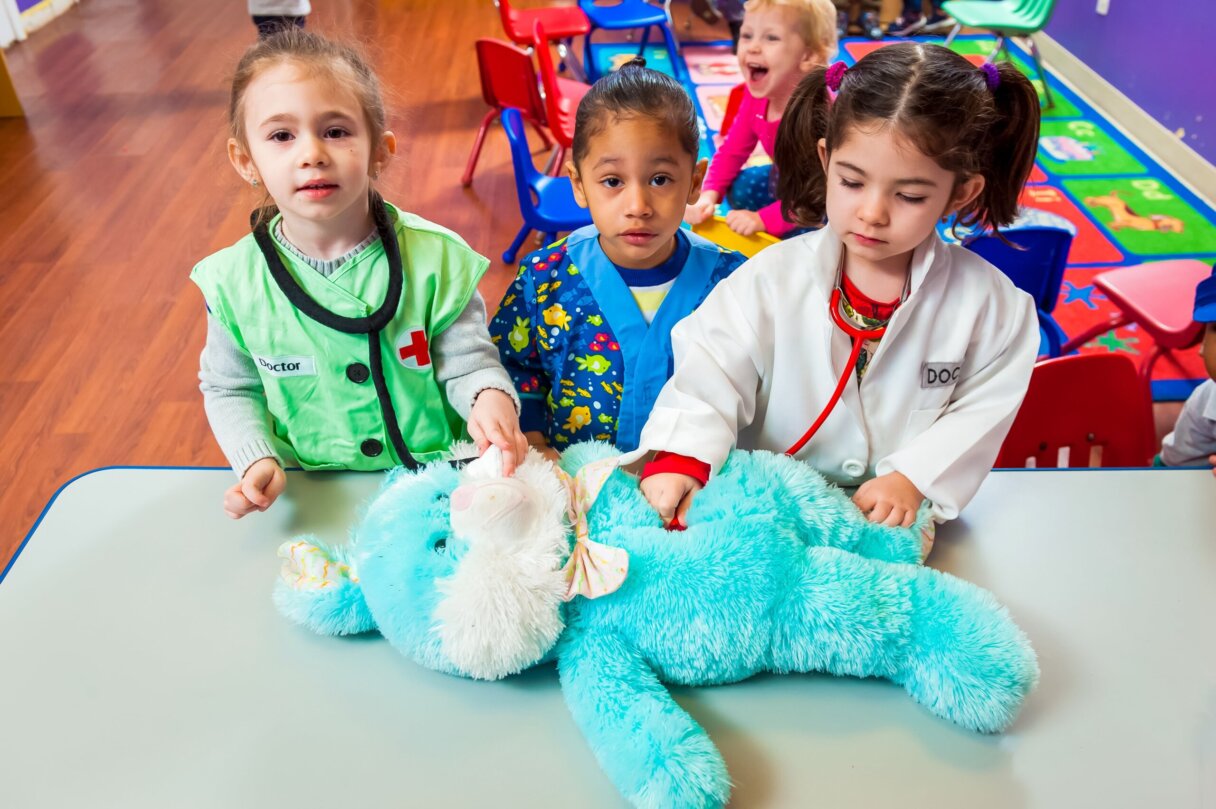
Kids have a lot of fun with role-plays, so to make them work with values, a teacher should create a few role-play scenarios where children need to find a solution to a problem using this or that value. For example, a teacher may make up a situation when a child finds someone’s lost thing and has to think about what to do with it.
By doing such activities, children try to apply values in practice, which can help to develop their critical thinking and problem-solving skills associated with ethical issues.
Value-Based Story Time
Choose stories where a value is central to the plot and read them together. After reading, kids should be provided with such literature to continue learning about values at home. An educator has to discuss what values were explored and how the actions of the characters involved might be avoided if they behaved a bit differently.
Such an activity can teach children empathy, letting them also think about whether everything they do is correct. They may also try to solve any problems in a more effective way by learning from the story.
Community Service Projects
Children can also participate in community service projects that should be presented in a way that is fun for kids, such as organizing a charity drive or helping in a school garden.
This shows children that even small actions have a positive impact on others.
Values Reflection Journal
Older kids may be asked to write a journal where they can analyze actions of the day, trying to find any connection with the core value.
Writing their thoughts down helps to reflect and may lead to a better understanding of personal values and thus to emotional and moral maturity.
Strategies for Integrating Values into Daily Routines
Modeling Values
Consistently demonstrate the values you wish for your children to learn – for example, modeling fairness in how you allocate tasks or resources among them.
Children learn values very effectively through observation and mimicry of adult behaviors, so consistent modeling will provide a clear example of what living those values is like.
Value of the Week
Establish a “Value of the Week” program, where every week or perhaps every month is dedicated to one of the values on your list. Activities, discussions, and recognitions can be centered around that value for the duration of the week.
Keeps the learning varied and fresh, while ensuring that all the core values you want your children to internalize are covered several times throughout the year.
Values in Routine Interactions
Implement discussions and examples of values into your day-to-day interactions with your children – for example, if a conflict arises between children, help them solve it, making references to the values relevant in the situation at hand, like fairness or respect.
It will help the children understand how the values they are learning apply to the reality of their lives, making their real-world application clear and non-abstract.
Positive Reinforcement
Provide praise and rewards on the occasions when a child exhibits a core value – for example, if your child has been kind or honest in a specific situation, point it out to them as a behavior to be proud of.
Positive reinforcement will motivate the child to keep up the behavior and strengthen their commitment to that value.
Stories as a Teaching Tool
Storytelling is a very powerful and ancient method to convey lessons and morals. Through stories, children can explore complicated and sometimes abstract ethical issues in a way that is approachable and pertinent to their lives. Different cultures and people have developed stories, parables, and fairy tales that illustrate a variety of moral principles, as well as ways through which to address all sorts of life situations.
Here are some examples of stories with morals:
“The Boy Who Cried Wolf” (Honesty)
Children learn the importance of honesty as a result of an ancient parable that shows the consequences of the manifestation of untruth in practice. This story helps children understand that it is better not to tell lies and always be honest, so that people trust them. In this case, they will not be in danger when they really need help.
“The Tortoise and the Hare” (Perseverance and Humility)
The best way to win a race is to start it and not be too arrogant, since excessive conceit leads to defeat. Although this fable is told to children for the sake of entertainment, it plays a positive role and helps develop a favorable feature for a person. The story teaches one of the friends to win, even if it is difficult, and the other, on the contrary, not to lose humility and to take flight.
“Stone Soup” (Community and Sharing)
Everybody wins when an individual is willing to pitch in and share with others. The story is a good way to get children to realize the meaning of community, sharing, and cooperation toward a common purpose.
“The Giving Tree” (Selflessness and Kindness)
The story is about selfishness and the joy that one gets from giving without expecting anything in return. The story is effective because it shows that “it is more blessed to give than to receive”.
“The Lion and the Mouse” (Kindness and Gratitude)
No matter how small, no act of kindness is ever wasted. Everyone has something to contribute. The message is directed toward teaching children that sometimes it is even the little things in life that count. Help can come from even the smallest creature, and it is important to appreciate the contributions of all.
Conclusion
It is imperative to teach children essential values. These values shape children’s persona and societal identity and help them lead their lives with honesty and respect. From integrity to empathy and responsibility to fairness, each value can significantly impact the emotional and ethical development of children, teaching them to be responsible, empathetic, and resilient adults. It is the job of parents and educators to not only recognize them but also ensure they are instilled in their children.
We can help our children learn these values through our everyday interactions, organized games, and endearing stories. It might take time, but the joy of seeing competent and confident children is unmatched.
At Little Scholars, we want to help you with this important mission of fostering these values among children. These values will help our children understand and live by the essential principles that can help them succeed in their futures and their communities. Join us in building a compassionate, ethical, and bright new generation of leaders.
Explore our programs to see how we weave value education into everyday learning at Little Scholars.