

Patience can feel like an impossible skill to teach when your child melts down because toast takes too long, another child gets the swing first, or dinner isn’t ready the moment they’re hungry. If you’ve searched for how to teach kids patience, you’re not alone. Nearly every parent of a toddler or preschooler faces this challenge.
Here’s the encouraging news: patience is not something children are born with. It is a skill they develop through repeated, low-pressure practice. Like learning to zip a jacket or ride a scooter, waiting gets easier through small, everyday experiences that gradually strengthen self-control.
As early childhood educators, we see this transformation happen every year. Children who once struggled to wait even a few seconds gradually learn to take turns, manage disappointment, and persist through small frustrations. Those skills do more than make daily life smoother. They become an important foundation for success in preschool and kindergarten.
Why young children struggle with patience
Patience for toddlers looks very different from patience in older children because their brains are still developing.
The part of the brain responsible for self-control, planning, and managing impulses is the prefrontal cortex. Think of it as the brain’s braking system. It helps us pause before acting, wait our turn, and tolerate frustration. That system develops gradually throughout childhood and continues maturing well into adulthood.
That means your three-year-old isn’t choosing impatience simply to make life difficult. Often, they’re reacting exactly as their brain is capable of at that moment.
What patience typically looks like by age
While every child develops at their own pace, these expectations are generally realistic:
| Age | Typical waiting ability |
| 2 years | About 30 seconds with adult support |
| 3-4 years | Around 2 to 3 minutes when engaged |
| 5 years | Up to 5 minutes for a meaningful reward with reminders |
These aren’t milestones your child must hit. Hunger, tiredness, excitement, illness, and temperament all influence how long children can comfortably wait.
What matters most is progress, not perfection.
Signs your child is learning to be patient
Patience develops gradually. You may notice small changes long before your child can happily wait through every situation.
Look for signs like these:
- Waiting briefly without crying or protesting.
- Saying “I’ll wait” without being prompted.
- Finding something else to do while waiting.
- Accepting “in a minute” without escalating immediately.
- Taking turns during games with fewer reminders.
- Recovering more quickly after disappointment.
When you notice these moments, name them.
Instead of saying, “Good job,” try:
“You waited while I poured your milk. That took patience.”
Specific praise helps children recognize the behavior you want them to repeat.
A Note from Our Director of Education
“Children rarely wake up one morning and suddenly become patient. We usually notice it in small moments first, like waiting quietly for a friend to finish speaking or accepting “you’re next” without becoming upset. Those little wins tell us their self-regulation is growing.”
Mariana Korsunsky, M.S.Ed., Co-Founder & Director of Education, Little Scholars Childcare Centers
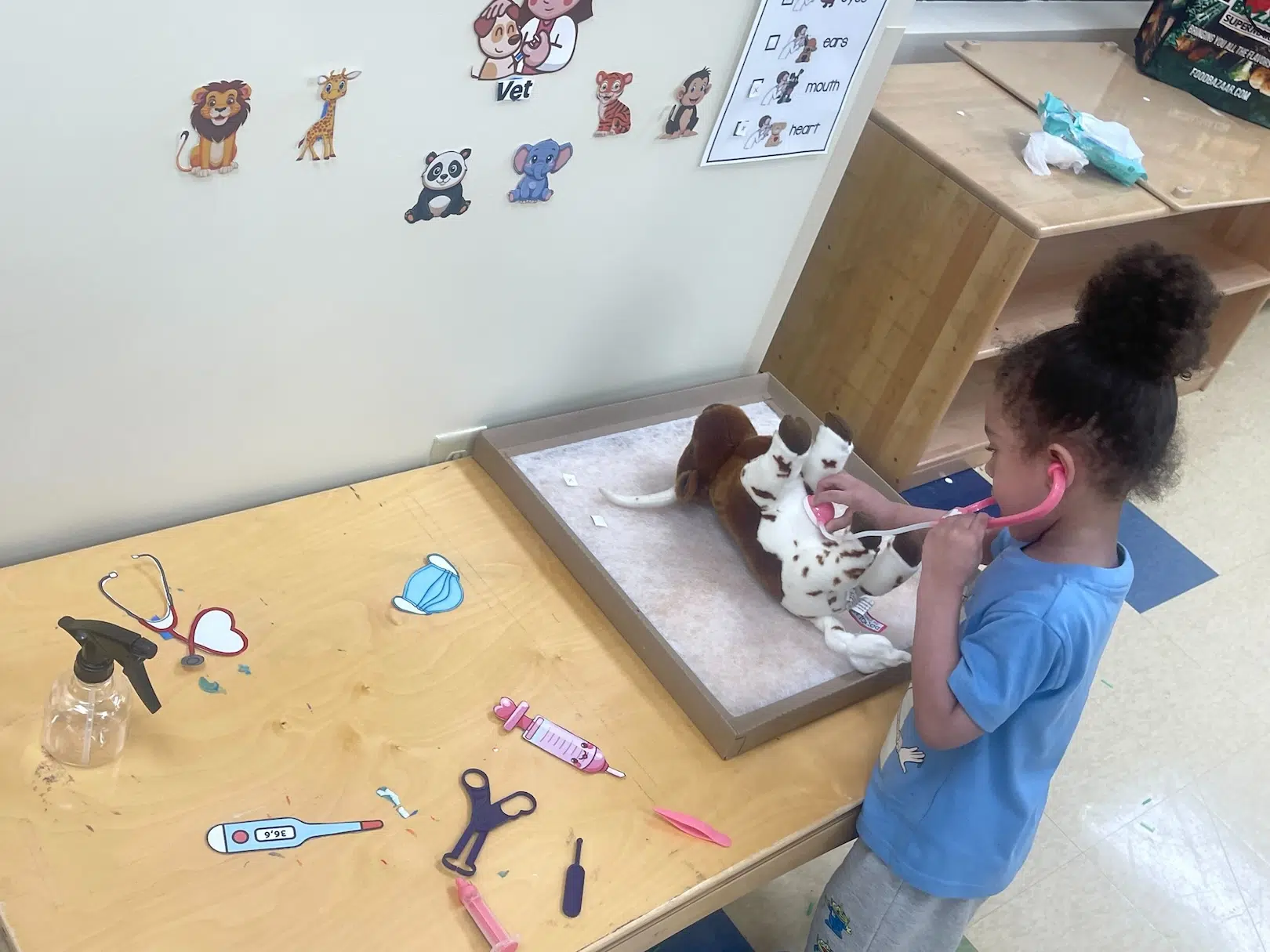
8 activities to teach kids patience at home and in the classroom
Patience isn’t built through lectures. It’s built through experiences where waiting feels manageable, predictable, and worthwhile.
1. Start with under-three-minute waits
The fastest way to teach patience is to make waiting achievable.
Ask your child to wait while you:
- pour a drink
- finish washing your hands
- count to 30
- put groceries away
Keep the wait short enough for them to succeed.
When the wait ends, acknowledge the effort.
Instead of:
“Thanks for waiting.”
Try:
“You waited while I finished. That wasn’t easy, and you did it.”
Notice that the praise focuses on waiting, not on receiving the reward.
Practical tip: Gradually increase waiting times by 15 to 30 seconds as your child becomes more successful.
2. Play turn-taking board games
Some of the best patience games for kids are classic board games because they build structured waiting into every turn.
Good choices include:
- Zingo! for younger preschoolers
- Candy Land for ages 3+
- Connect 4 for older preschoolers
Games work because children always know another turn is coming. The wait has a clear beginning and end, making it much easier to tolerate.
During the game, narrate what’s happening.
“It’s my turn now. Yours is next.”
Simple language helps children connect waiting with predictable outcomes.
Practical tip: Keep games short enough that children finish while they’re still having fun.
3. Grow something together
Nature teaches patience better than almost anything else.
Plant a bean seed inside a clear plastic bag with a damp paper towel and tape it to a sunny window.
Every day, check together.
Instead of asking:
“Why isn’t it growing?”
Ask:
“What has changed since yesterday?”
Children begin to understand that worthwhile things often happen slowly.
The same principle applies when watching butterflies emerge from chrysalises or tending a small herb garden.
Waiting becomes part of the activity rather than an obstacle.
Practical tip: Take daily photos so your child can see progress even when change feels slow.
4. Cook or bake together
Cooking naturally creates waiting opportunities.
Children help:
- mix ingredients
- stir batter
- knead dough
- set the timer
- smell food baking
Unlike arbitrary waiting, cooking has visible progress.
The timer counts down.
The dough rises.
The cookies turn golden.
Children learn that waiting often leads to something enjoyable.
Practical tip: Let your child press the timer button. Having a concrete countdown makes waiting feel more manageable.
5. Make art that needs drying time
Many creative projects require children to pause before seeing the finished result.
Great examples include:
- watercolor paintings
- glue-and-collage projects
- salt dough
- papier-mâché
- painted rocks
Rather than hovering over the project, create a routine.
Say:
“Let’s put this on the drying shelf. We’ll come back after lunch.”
This teaches children that some work simply takes time.
They begin separating “finished later” from “never.”
Practical tip: Designate a special drying space so waiting becomes part of the creative process rather than an interruption.
6. Read books that celebrate waiting
Books help children experience patience through characters before practicing it themselves.
Some excellent choices include:
- Waiting by Kevin Henkes
- Waiting Is Not Easy! by Mo Willems
- Those Darn Squirrels! by Adam Rubin
These stories create natural conversations.
Ask questions like:
- “How did the character feel while waiting?”
- “What helped?”
- “Have you ever felt that way?”
These discussions build emotional vocabulary alongside patience.
Practical tip: Reading together is one of the simplest patience activities for kids because stories naturally slow the pace and encourage reflection.
7. Practice “I’m Waiting” breathing
Children can’t use calming strategies they’ve never practiced.
Instead of introducing deep breathing in the middle of a meltdown, teach it during calm moments when your child is relaxed and receptive.
A simple routine works well:
“Let’s take three slow breaths together while we wait.”
Count slowly.
- Breathe in.
- Breathe out.
- Repeat three times.
The goal isn’t to eliminate frustration. It’s to give your child something constructive to do while their brain practices waiting.
Over time, many children begin using this strategy independently.
One of our preschool teachers noticed a four-year-old who used to become upset whenever another child was first in line. After several weeks of practicing three slow breaths during classroom transitions, he started whispering, “I’ll do my breathing,” before joining the line. It wasn’t a dramatic overnight change. It was dozens of small moments adding up to a new habit.
That is how patience develops: one successful wait at a time.
Practical tip: Practice the breathing routine during everyday situations like waiting for the elevator or standing in the grocery checkout line. Familiar situations make it easier for children to use the strategy when bigger frustrations arise.
8. Create predictable transition routines
Some of the biggest challenges to patience occur during transitions.
Leaving the playground.
Cleaning up toys.
Waiting for everyone to finish their snack.
Getting ready to go outside.
In early childhood classrooms, transitions aren’t treated as “dead time.” They’re learning opportunities.
At Little Scholars, teachers build waiting into the daily routine through simple, predictable activities such as:
- line-up songs
- freeze dances between activities
- one-minute sand timers
- countdowns before cleanup
- turn-taking jobs during transitions
These routines give children a clear expectation of what happens next. Predictability reduces anxiety, and lower anxiety makes waiting easier.
You can recreate the same structure at home.
For example, before dinner, set a one-minute timer and invite your child to help set the table. Before leaving the park, sing the same cleanup song every visit. Small routines create consistency, and consistency helps children practice patience without feeling overwhelmed.
Practical tip: Use the same transition cue each day. Children learn routines faster when the signal never changes.
Does screen time make it harder for kids to learn patience?
Screen time itself isn’t the problem. The challenge is that many digital experiences eliminate opportunities to practice waiting.
Videos autoplay. Games provide instant rewards. Entertainment is available the moment a child feels bored.
Real life works differently.
Children need opportunities to:
- wait for a turn
- finish a puzzle before starting something new
- let cookies bake instead of skipping to the end
- sit through a story without tapping to the next activity
That doesn’t mean avoiding screens altogether. It means balancing instant entertainment with activities that naturally build delayed gratification.
Whenever possible, create moments where your child experiences boredom, anticipation, and waiting. Those experiences exercise the same self-regulation skills they’ll use in preschool, kindergarten, and everyday life.
How to model patience out loud
Children learn patience by watching the adults around them.
If you become visibly frustrated every time traffic slows down or a website takes too long to load, your child notices. Likewise, when you handle delays calmly, you’re demonstrating exactly what patience looks like.
This is one of the most effective ways to teach self-regulation because children hear the thinking behind the behavior.
Try narrating your patience out loud.
Scripts to try when teaching kids patience
- “The line is long today. That’s okay. We can wait together.”
- “Dinner isn’t ready yet, so I’m going to take a few deep breaths.”
- “I’m disappointed, but getting upset won’t make it happen faster.”
- “I’m waiting my turn to talk because someone else is speaking.”
These simple statements help children understand that patience is an active skill, not something adults automatically possess.
Just as important is what not to model.
Avoid:
- sighing dramatically
- complaining about every delay
- checking your phone repeatedly while waiting
- saying “Hurry up!” every few seconds
Your child learns far more from what you do consistently than from what you tell them once.
If you’re also working on emotional regulation, you may find our guide to Teaching Emotional Intelligence Activities helpful. It complements patience-building by giving children the language to understand and manage their feelings.
Patience and kindergarten readiness
Patience is much more than a social skill. It is one of the building blocks of kindergarten readiness.
When children enter kindergarten, teachers expect them to:
- wait for the teacher’s attention instead of interrupting
- stand in line with classmates
- take turns during circle time
- begin independent work without immediate help
- stick with a task even when it’s challenging
Children who have practiced waiting in preschool often adjust more smoothly during the first weeks of school because these routines already feel familiar.
Children who build patience in preschool arrive in kindergarten better prepared to follow directions, take turns, and persist through everyday challenges. This combination of self-control and resilience supports both academic learning and positive peer relationships.
That is one reason patience is woven into daily classroom life rather than taught as a single lesson. Waiting happens during group activities, cleanup, snack time, outdoor play, and classroom transitions, giving children dozens of natural opportunities to practice every day.
If you’re preparing for the next stage of your child’s education, explore our Preschool Program to learn how daily routines support school readiness. You may also find an article called “How Can I Get My Kid Ready for Preschool?“ helpful for additional preparation tips.
Preschool Program in NYC for Ages 2–5
Find our top-rated private preschools in Brooklyn and Manhattan, Chelsea. We have 7 locations for Preschool (2-5 y.o.) program:
-
Manhattan Beach – 104 West End Ave, Brooklyn, NY, 11235
-
Marine Park – 4123 Avenue U, Brooklyn, NY 11234
-
Chelsea – 600 6th Avenue, New York, NY 10011
-
Downtown Brooklyn – 345 Adams Street, Brooklyn, NY, 11201
-
Gravesend – 52 Quentin Road, Brooklyn, NY, 11223
-
Bensonhurst – 1502 W 1st St, Brooklyn, NY 11204
-
Ditmas Park – 631 East 18th Street, Brooklyn, NY, 11226
Key takeaways
Patience isn’t built through long lectures or perfect behavior. It’s built through hundreds of small moments where your child successfully waits, takes a turn, or works through a brief frustration with your support.
Start with short waits. Celebrate effort instead of perfection. Model patience out loud. Use games, books, routines, and everyday activities to make waiting feel achievable instead of overwhelming.
At Little Scholars, we incorporate these opportunities into each school day because we know that self-regulation develops through consistent practice, not pressure. If you’d like to see how our classrooms support social-emotional development alongside academic learning, book a tour at your nearest Little Scholars location or call (646) 759-0790 to learn more.
Frequently asked questions about teaching children patience
How long does it take to teach a child patience?
Most children show noticeable improvement within four to six weeks of consistent practice. Progress depends on age, temperament, and how often children have opportunities to practice waiting in everyday situations.
At what age can children start learning patience?
Children can begin learning patience as early as 18 months. At this stage, focus on very short, supported waits lasting only a few seconds. As children grow, gradually increase the amount of time they are expected to wait.
What if my child has difficulty with impulse control?
Some children need more support than others. If even brief waits consistently lead to intense distress or significantly interfere with daily routines, discuss your concerns with your pediatrician. They may recommend an evaluation by an occupational therapist, developmental pediatrician, or another specialist if appropriate.
How is teaching patience different in a daycare setting than at home?
A quality daycare naturally creates repeated opportunities to practice patience through turn-taking, classroom transitions, group activities, shared materials, and daily routines.
At home, you can reinforce those same skills by creating predictable routines and giving your child regular opportunities to wait successfully in low-pressure situations./