Life Skills for Kids: An Age-by-Age Guide to Raising Confident, Independent Children

Parents want their children to grow into confident, capable people, but knowing which life skills to teach, and when, isn’t always obvious. Push too much independence too early, and everyone gets frustrated. Step in too quickly, and children miss valuable chances to practice.
The good news? Life skills don’t require extra lessons. From carrying a backpack to working through a disagreement, children build independence through everyday moments. These moments may seem small, but together they shape how children solve problems, manage emotions, and navigate the world.
At Little Scholars, we see life skills develop every day. They’re not taught during a single lesson or special activity. They’re built through consistent routines, meaningful play, and patient guidance from teachers who know when to step in and when to step back. Read on to learn what to focus on from infancy to age five, and how to turn everyday routines into opportunities for your child’s growth.
What Are Life Skills?
Life skills are the everyday abilities children use to become more independent and confident.
For young children, they include practical skills like washing hands, getting dressed, and cleaning up after play. They also include social and emotional skills like communicating needs, managing frustration, taking turns, and solving simple problems.
These abilities don’t develop because children are told they’re important. They develop because children practice them over and over in everyday life.
That’s why the first five years matter so much. Every routine, like getting dressed, eating lunch, playing with friends, and helping to tidy up, gives children another chance to build confidence.
The goal isn’t raising a perfectly independent four-year-old. The goal is raising a child who believes, “I can try.“
Why Life Skills Matter More Than Many Parents Realize
Parents naturally spend a lot of time thinking about academic milestones.
Can my child recognize letters? Do they know their colors? Can they count to ten?
Those skills are important, but kindergarten teachers consistently say successful students share another set of characteristics.
They can:
- follow simple routines
- ask for help when they need it
- wait for a turn
- recover after making mistakes
- solve small disagreements
- take responsibility for their belongings
These are life skills. Academic learning becomes much easier when children already know how to participate in a classroom, work with others, and approach challenges with confidence.
That’s one reason high-quality early childhood development programs focus on the whole child instead of academics alone. Every transition, classroom job, and group activity becomes another opportunity to practice these essential habits.
Life Skills by Age
Every child develops at their own pace, but there are common milestones parents can expect during the early years.
Infants (0–12 Months): Learning Through Relationships
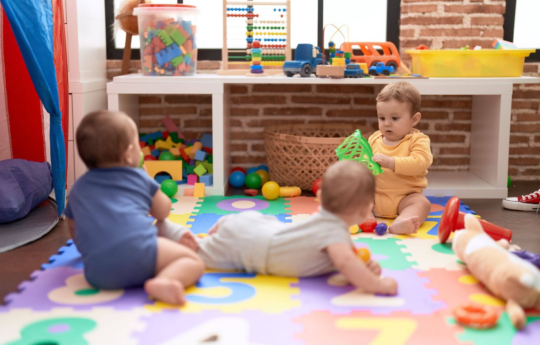
Life skills begin long before children can speak.
During infancy, babies learn that their actions have meaning. A smile brings a smile back. A cry brings comfort. A reach toward a toy leads to exploration.
These early experiences build the foundation for communication, confidence, and curiosity.
During the first year, many infants begin to:
- respond to familiar voices
- make eye contact
- explore objects with their hands
- imitate simple facial expressions
- communicate through sounds and gestures
- begin calming with adult support
Try this at home: Narrate everyday routines like diaper changes or feeding. Simple conversations expose babies to language while strengthening your connection.
Toddlers (1–3 Years): “I Want to Do It Myself”
If you’ve ever heard your toddler proudly announce, “Me do it!”, you’ve witnessed one of the biggest developmental shifts of early childhood.
Toddlers crave independence. Although letting them practice takes more time, those extra minutes are where learning happens.
Children this age often begin:
- washing hands with help
- feeding themselves
- putting toys away
- carrying a small backpack
- following one- and two-step directions
- choosing between two options
- naming simple emotions
At Little Scholars, teachers encourage children to participate instead of completing every task for them. Rather than zipping every jacket, they guide children through the process, offering help only when needed.
Those small successes gradually become confidence.
Preschoolers (3–5 Years): Getting Ready for Kindergarten
As children approach kindergarten, life skills become increasingly social in nature.
Instead of simply caring for themselves, preschoolers begin learning how to cooperate, solve problems, and contribute to a group.
Many children this age begin to:
- dress independently
- follow multi-step routines
- resolve simple conflicts
- express emotions with words
- complete classroom jobs
- clean up without reminders
- persist through challenges
These abilities don’t just make classrooms run more smoothly. They help children feel capable when faced with new experiences.
How Children Actually Learn Life Skills
Parents often ask, “What’s the best way to teach independence?” The answer usually isn’t a new activity. It’s a different approach to everyday routines. Actually, children build life skills through four simple stages.

They Watch
Children learn by observing parents, siblings, and teachers. Whether it’s putting dishes away or greeting someone politely, adults model the behaviors children eventually imitate.
They Help
Before children can do something independently, they do it alongside an adult. A toddler may place one spoon on the table while you set the rest. A preschooler may zip their coat after you’ve started the zipper. This shared participation builds confidence without creating frustration.
They Practice
Life skills aren’t mastered after one successful attempt. Children need consistent opportunities to repeat the same routines until they become familiar. That’s why classroom routines are so powerful. Children practice the same expectations every day.
They Do It Themselves
Eventually, adults step back. Not because children are perfect, but because they’re ready to try. That’s how independence grows—not all at once, but one small responsibility at a time.
Eight Essential Life Skills Every Child Needs
Children develop hundreds of abilities during their first five years, but eight life skills form an especially important foundation for independence, relationships, and school readiness. Together, these life skills help children become more independent at home, more successful in the classroom, and more confident when facing new challenges.

1. Independence: Learning to Do Things Without Always Needing Help
Independence doesn’t mean expecting young children to do everything on their own. It means giving them opportunities to participate in everyday routines.
At Little Scholars, that might look like a toddler putting their lunchbox in a cubby or a preschooler pouring their own water at snack time. Teachers offer guidance when needed, but they resist the urge to step in too quickly.
Those small moments send a powerful message: “You’re capable.”
At home, look for opportunities to slow down just enough to let your child try first. Yes, putting on shoes may take longer today, but every attempt builds confidence for tomorrow.
2. Communication: Expressing Needs and Building Relationships
Communication begins long before children start speaking in full sentences.
Babies communicate through eye contact, facial expressions, and gestures. Toddlers begin using words to express wants and needs. Preschoolers learn to ask questions, explain ideas, and work through disagreements using language instead of frustration.
Teachers support this development throughout the day by encouraging conversation rather than simply giving instructions.
Instead of asking, “Did you have fun?” they might ask:
“What was your favorite part of building with blocks today?”
Open-ended questions encourage children to think, remember, and communicate more clearly.
Try this at home: During dinner or bedtime, ask one question that can’t be answered with “yes” or “no.” Giving children time to tell stories helps strengthen both language and confidence.
3. Emotional Regulation: Managing Big Feelings
Young children experience disappointment, excitement, frustration, and joy just as intensely as adults. The difference is they’re still learning what to do with those emotions.
That’s why emotional regulation isn’t about preventing big feelings. It’s about teaching children healthy ways to respond to them.
In the classroom, teachers help children recognize emotions, take deep breaths, use words to solve conflicts, and understand that all feelings are acceptable—even if some behaviors are not.
For example, if two preschoolers want the same toy, a teacher is more likely to coach them through the problem than immediately decide who gets it first. Those conversations help children build empathy, patience, and self-control over time.
4. Problem-Solving: Building Confidence Through Challenges
Every challenge is an opportunity to learn.
When a block tower falls over, or a puzzle piece doesn’t fit, it can be tempting to jump in with the solution. But children develop resilience when they’re encouraged to think through problems for themselves.
That doesn’t mean leaving them to struggle alone.
Instead, teachers ask guiding questions like:
- What do you think happened?
- What could you try next?
- Can you think of another way?
This type of coaching teaches children that mistakes aren’t failures—they’re part of learning.
It’s a mindset that supports success far beyond preschool.
5. Responsibility: Becoming Part of a Community
Responsibility begins with simple routines.
Putting books back on the shelf. Throwing away a napkin after snack. Helping water classroom plants. Carrying a backpack instead of expecting someone else to do it.
These tasks may seem small, but together they help children understand that they’re capable contributors.
In a classroom, responsibility also means caring for shared spaces and respecting others. Children learn that their actions affect the people around them, whether they’re helping clean up after an art project or waiting patiently while a friend finishes speaking.
6. Cooperation and Teamwork: Learning to Be Part of a Group
Young children quickly discover that being part of a classroom means they can’t always do things their own way. They learn to share materials, take turns, listen to other ideas, and work toward a common goal.
Teachers build cooperation naturally through partner activities, group art projects, dramatic play, and everyday classroom jobs. A preschooler helping a friend carry a basket of blocks may look like simple play, but they’re practicing communication, patience, and compromise at the same time.
Try this at home: Give siblings or family members a small job to complete together, such as setting the table or putting toys into their bins.
7. Adaptability and Resilience: Learning What to Do When Things Don’t Go as Planned
A block tower falls. A favorite activity ends. Someone else gets the red marker.
For a young child, these are real disappointments—and valuable opportunities to learn how to recover.
Teachers build resilience by allowing children to experience manageable frustration without immediately removing it. They acknowledge the feeling, offer support, and encourage another attempt: “That didn’t work the way you wanted. What could we try next?”
Over time, children learn an important lesson: something going wrong doesn’t mean they have to give up.
That ability becomes especially valuable when children enter kindergarten, where new routines, harder tasks, and unexpected changes are part of every school day.
Try this at home: When a small plan goes wrong, resist fixing it immediately. Name the disappointment, then ask, “What could we do instead?”
8. Safety Awareness: Learning to Make Safe Choices
Independence only works when children gradually learn how to recognize boundaries that keep them safe.
For toddlers, that may mean holding an adult’s hand near the street, walking rather than running indoors, or understanding that some objects are for adults only. Preschoolers can begin learning why rules exist and making simple safe choices themselves.
In the classroom, teachers reinforce safety through repetition rather than fear. Children practice walking together during transitions, using materials appropriately, and stopping when a teacher gives a safety cue. Predictable routines help these behaviors become habits.
The goal isn’t to make young children responsible for their own safety. Adults remain responsible for supervision. The goal is to give children an age-appropriate understanding of how their choices help keep themselves and others safe.
Try this at home: Instead of only saying “Don’t do that,” briefly explain the boundary: “We hold hands when we cross because cars may not see us.”
These everyday habits prepare children not only for kindergarten but for life in any community.
Signs Your Child Is Building Life Skills
Parents sometimes wonder whether these everyday routines are making a difference.
The good news is that progress often shows up in small, encouraging ways.
Your child may be building strong life skills if they:
- insist on trying tasks independently before asking for help
- follow familiar routines with fewer reminders
- use words instead of tantrums more often
- recover more quickly after becoming frustrated
- help clean up without being asked every time
- show kindness by comforting or helping another child
- keep trying even when something feels difficult
Remember, progress doesn’t happen all at once. Some days your child will proudly put on their own shoes. The next day they may ask you to do it for them. That’s completely normal. Life skills develop gradually through repetition, encouragement, and opportunities to practice—not through perfection.
Common Mistakes Parents Make
Supporting your child’s independence doesn’t require expensive toys or elaborate activities. In fact, the biggest obstacles are often well-intentioned habits.
Doing everything for your child. It may be faster to finish the task yourself, but children learn by participating. Whenever possible, let them take on age-appropriate responsibilities.
Expecting perfection too soon. Learning takes time. Celebrate progress rather than flawless results.
Inconsistent routines. Children thrive on predictability. Simple routines for mornings, mealtimes, and bedtime help life skills become habits.
Rescuing too quickly. It’s natural to want to help when your child struggles, but a brief pause gives them the chance to solve small problems independently.
Comparing your child to others. Every child develops at their own pace. Focus on steady growth rather than comparing milestones with friends or siblings.
By avoiding these common pitfalls, you’ll create more opportunities for your child to build confidence through everyday experiences.
Conclusion: Helping Your Child Build Skills for Life
There’s no single moment when a child suddenly becomes independent. It happens gradually.
One day they carry their own backpack. A few weeks later, they remember to put it away without being asked. Eventually, they’re helping a younger sibling zip up a jacket or reminding a friend to wash their hands before lunch.
Those small victories are easy to overlook, but they’re the moments that shape confident, capable children.
At Little Scholars, we believe life skills are just as important as academic skills because they give children the confidence to explore, solve problems, and build meaningful relationships. Through play-based learning, consistent routines, and caring teacher guidance, children practice these skills every day in ways that feel natural and enjoyable.
When families reinforce those same habits at home, children receive a consistent message: you’re capable, you’re trusted, and every new challenge is an opportunity to grow.
If you’re looking for a daycare or preschool that supports your child’s social, emotional, and academic development, we’d love to show you how our classrooms help children build the skills they’ll carry with them for life.
Book a tour of one of our locations to meet our educators, explore our programs, and see how Little Scholars helps children grow into confident, independent learners.
Frequently Asked Questions on Life Skills for Kids
What are the most important life skills for kids?
For young children, the most important life skills include independence, communication, emotional regulation, problem-solving, responsibility, cooperation, adaptability, and safety awareness.
These skills help children navigate daily routines, build healthy relationships, and adapt to new environments like daycare and kindergarten. Rather than being taught through formal lessons, they’re best developed through consistent practice in everyday activities.
What life skills should a 2-year-old have?
Every child develops at their own pace, but many two-year-olds are beginning to feed themselves, wash their hands with help, follow simple directions, put toys away, express basic emotions, and make simple choices.
The goal isn’t perfect independence—it’s building confidence through participation in everyday routines.
How can I teach my child life skills at home?
The best opportunities are already part of your day. Invite your child to help set the table, put dirty clothes in the hamper, water plants, or tidy up after play. Give them time to try before stepping in, praise their effort rather than the outcome, and keep routines consistent.
Small responsibilities repeated over time have a much bigger impact than occasional “teaching moments.”
How does Little Scholars daycare help children develop life skills?
At Little Scholars, we don’t separate life skills from learning—we build them into the daily routine. Children practice washing their hands before meals, taking turns during activities, cleaning up after play, expressing their needs, and resolving simple conflicts with a teacher’s guidance. These repeated experiences turn everyday routines into lasting habits.
Are life skills as important as academic skills?
Yes. Learning letters and numbers is important, but children also need the confidence to ask questions, the patience to follow directions, the resilience to recover from mistakes, and the social skills to work with others. These abilities make it easier for children to participate in the classroom and get the most out of their academic learning.