Parents in Brooklyn are now choosing a daycare much more carefully than they were a few years ago: it’s no longer enough to simply find a place near the house. It’s important to see how the child’s day goes, how the caregivers communicate with the children, and whether there is peace and stability in the group. Little Scholars NYC helps families understand childcare centers not by descriptions, but by the real experience of organizing the process.
In 2026, the choice has become more difficult due to higher demands, because parents expect not just care, but a safe environment, a clear daily routine and effective early learning programs. That is why they are often looking for the best child care near you.
Why Choosing Daycare in Brooklyn Feels More Complex in 2026
In Brooklyn, choosing a daycare center has become more complicated, as parents now evaluate not only proximity or availability of places, but also how their child’s day goes, how the teachers work, and whether the daycare truly supports development, emotional state, and a stable daily routine.
Rising demand for reliable child care
After the pandemic, the demand for quality daycare in Brooklyn has increased significantly: many families have returned to office work, and flexible schedules no longer solve the childcare issue as before.
Parents now look not at one factor, but at the big picture — how the team works, what the atmosphere is in the group, and whether there is a sense of stability and security. They often pay attention to the composition of educators, group size, daily routine, and how the kindergarten supports the child’s emotional state, as well as observe how children behave in the group and how educators respond in difficult situations.
“Kindergarten should not be perceived as a temporary place for a child. This is an environment where a sense of security, independence, and trust in the world are gradually formed,” say Little Scholars NYC specialists.
Why proximity alone is not enough
A few years ago, most parents chose a kindergarten simply based on the principle of “closer to home,” but in 2026, this is no longer enough. Even a nearby institution is evaluated more deeply — who works with children, how safe it is, how organized the day is, and whether it helps the child adapt.
Below are the main things that are most often compared with each other:
| Criterion | Why It Matters |
| Teacher qualifications | Strong educators help support early childhood education and age-appropriate learning |
| Safety standards | A secure environment reduces the risk of injuries and lowers stress for children |
| Daily routine | Consistent schedules help stabilize child behavior and improve adaptation |
| Outdoor play | Active play supports motor skills, coordination, and physical development |
| Parent communication | Regular updates help parents understand their child’s progress and emotional well-being |
Over time, parents increasingly come to a simple conclusion: it’s not just the proximity of the kindergarten that matters, but how the child feels inside it every day.
How Parents Should Compare Daycare Centers
When parents choose a daycare center, it is important to look not only at the price or location, but also at the organization of education, the interaction of educators with children, the level of safety and whether the program supports the development and behavior of the child in the group.
Safety standards
Safety remains a key factor, but today it is not only about cameras or locks. It is important how many children there are per educator, how they act in emergencies, whether sanitary standards are observed, how the child is handed over to the parents and how well the staff is trained.
It is also worth paying attention to the reaction of adults in conflicts between children — calm behavior without shouting usually indicates a healthy atmosphere in the group.
Teacher-child interaction
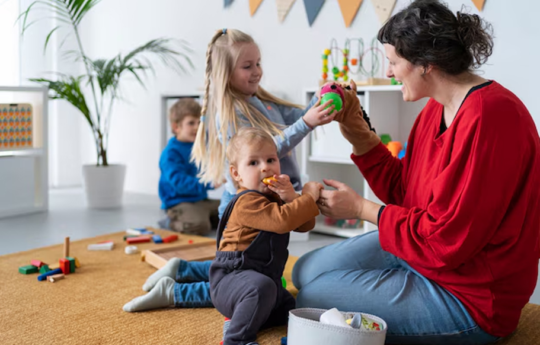
It is the interaction between the teacher and the children that often best shows how daycare actually works. This is seen not from descriptions, but during live observation in the group.
During the visit, it is worth paying attention to a few simple things:
- whether the teacher is close to the children, not on the sidelines;
- whether he maintains a dialogue, not just giving instructions;
- whether he responds to the child’s emotions (tiredness, joy, irritation);
- whether he involves children in play and interaction;
- whether he communicates in a calm, even tone.
There is another important point that is often emphasized in early development studies: stable emotional contact with an adult helps the child adapt more easily to a new environment and reduces the cortisol levels.

“Children learn through relationships. If a child feels safe next to an adult, his social and cognitive skills develop faster,” Little Scholars NYC explains.
Daily routine
A clearly organized day in kindergarten directly affects how a child feels in a new environment. When there is a clear rhythm, it is easier for children to adapt and feel calmer.
A good schedule usually includes the following elements:
- active games;
- time for quiet activities;
- walks in the fresh air;
- creative activities;
- reading;
- meals;
- rest.
When the day is built chaotically, without a clear structure, children get tired faster and can control their behavior worse during the day.
What Strong Daycare Programs Should Support
Strong daycare programs are not just about providing a safe environment for your child. They are about supporting different areas of development according to age: emotional, social, and physical.
Motor skills
Motor skills development begins not only on the playground, but also in everyday activities. Good programs usually include:
- drawing;
- modeling;
- building blocks;
- sensory play;
- dancing;
- outdoor activities.
Through movement, children learn to better coordinate their bodies, maintain attention, and gradually manage their emotions.
Social-emotional growth
Social-emotional development is one of the key reasons why parents look for the best day care near you before going to work. In such programs, children gradually learn to:
- interact with others;
- negotiate;
- express their emotions;
- work in a group;
- wait your turn.
This forms a base that later helps a lot during adaptation at school.
Developmental milestones
In professional best day care centers near you, a child’s development is monitored regularly, but without formal pressure or “checks.” Rather, it is a daily observation of how the child behaves, interacts with others, and gradually acquires new skills.
Typically, attention is paid to several areas of development: speech and the ability to express basic needs, social interaction with other children, physical coordination and movement, the level of independence in simple actions, and emotional reactions to different situations.
If the institution cannot clearly explain how exactly they monitor and support children’s development, this may be a signal for parents to take a closer look at such a daycare center.
How Little Scholars Approaches Early Childhood Care
The Little Scholars NYC team emphasizes an environment in which children can feel calm, gradually develop independence, and comfortably adapt to new daily habits.
Structured routines
At Little Scholars NYC, a strong emphasis is placed on a stable daily routine.
For young children, predictability means security. When a child understands the sequence of the day, anxiety levels are reduced and adaptation occurs more quickly. The schedule includes:
- active activities;
- reading;
- sensory activities;
- outdoor play;
- rest time;
- quiet games.
Play-based learning
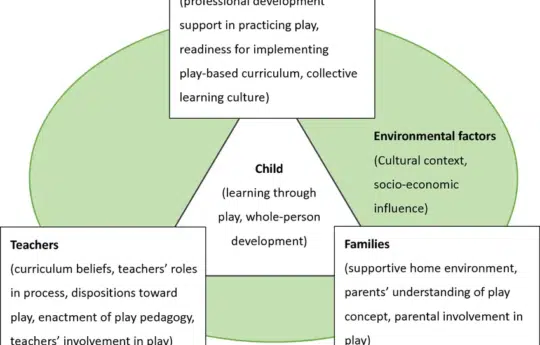
Play-based learning remains one of the most effective approaches in early childhood education. Through play, children:
- learn to interact;
- develop speech;
- train motor skills;
- learn cause-and-effect relationships;
- build confidence.
At Little Scholars NYC, learning doesn’t look like a traditional school. The main emphasis is on the child’s natural curiosity.
Multiple NYC locations
For many families, not only quality is important, but also the accessibility of locations. Little Scholars NYC has several centers in New York, which allows parents to choose an option closer to home or work without losing the quality of the program.
-
Gravesend – 52 Quentin Road, Brooklyn, NY, 11223
-
Brighton Beach – 448 Neptune Avenue, Brooklyn, NY, 11224
-
Manhattan Beach – 104 West End Ave, Brooklyn, NY, 11235
-
Marine Park – 4123 Avenue U, Brooklyn, NY, 11234
-
Bensonhurst – 1502 W 1st St, Brooklyn, NY, 11204
-
Ditmas Park – 631 East 18th Street, Brooklyn, NY, 11226
-
Chelsea – 600 6th Avenue, New York, NY, 10011
-
Downtown Brooklyn – 345 Adams Street, Brooklyn, NY, 11201
This is especially important for families with busy schedules.
Practical Checklist for Brooklyn Parents
Even a good daycare should be evaluated carefully, so before making a final choice, parents need to prepare a list of questions and pay attention to details during a personal visit.
What to ask before enrollment
Before enrolling a child, you should ask the daycare administration a few important questions:
- What is the ratio of caregivers to children?
- How is the adaptation going?
- Is there outdoor play every day?
- How is the daily routine organized?
- How does the staff respond to conflicts?
- How are developmental milestones assessed?
- How is communication with parents?
Parents looking for the best daycare near you often skip these questions due to emotions or haste.
What to observe during a tour
During a tour, pay attention not only to the interior, but also:
- the atmosphere in the groups;
- the children’s reaction to the teachers;
- the noise level;
- the cleanliness;
- the organization of the space;
- the safety of the furniture;
- the behavior of the staff.
If the children look tense or the staff constantly shouts, this is an important signal.
Common Mistakes Parents Make When Choosing Daycare
Even careful parents sometimes make mistakes when choosing a daycare. The most common mistakes:
| Common Mistake | Possible Result |
| Choosing a daycare based only on location | Lower program quality and fewer developmental opportunities |
| Focusing only on daycare cost | Overlooking the child’s emotional and educational needs |
| Skipping a daycare tour | Unrealistic expectations about the environment and staff |
| Ignoring the daily routine | More difficult adaptation for the child |
| Making a decision based on advertising alone | Disappointment after enrollment |
Daycare cost is important, but parents should evaluate the price-quality ratio, not just the number in the contract.
Why Early Education Matters Before School
Early education directly affects the child’s subsequent adaptation to school. Children who attend strong daycare programs often:
- socialize more easily;
- adapt to rules faster;
- concentrate better;
- have more stable child behavior;
- develop speech faster.
That is why the search for the best childcare near you has become a long-term solution for many families, not a temporary need.
Conclusion: How to Choose With Confidence
In 2026, parents in Brooklyn pay more attention not only to the location or cost, but also to how the child feels every day in the kindergarten. Atmosphere, safety, the approach of educators and development are important.
Good child care centers provide not just care, but a stable foundation for the child’s development — motor skills, social interaction, emotional balance and confidence in new situations. Therefore, a combination of regimen, learning through play and a modern approach to early development is important.
For many families, Little Scholars NYC has become an example of how daycare can support both the child and parents in everyday life.
FAQ
What is the best infant daycare near me?
There is no single criterion. Parents look at the experience of the caregivers, a calm atmosphere, safety and a clear daily routine that the child quickly gets used to.
How do I choose the best childcare center near me?
Usually they evaluate the team, organization of the day, walks, safety and how the caregivers communicate with children and parents.
What should Brooklyn parents compare before choosing a daycare?
Safety, approach to development, stability of the regime, qualifications of the staff, interaction with children and the general atmosphere.
How important is daily routine in a daycare center?
Very important. The regime helps children adapt more easily, reduces stress and makes behavior more stable.
What signs show that a daycare supports child development?
This is visible in daily work: how caregivers interact with children, whether play is part of learning, and whether the gradual development of skills is noticeable.
How should parents evaluate daycare cost and value?
It is important to look not only at the price, but also at the quality of care, safety, child development and team stability.
What questions should parents ask during a daycare tour?
How the day goes, how the walks are organized, how the adaptation takes place, the size of the groups and how parents are informed about the child.