Parents looking for toddler daycare often focus on safety and convenience, but programs can differ significantly in how they support early learning. Understanding these differences can help families make more informed choices.
Many toddler childcare programs look similar at first glance, but the difference between simple supervision and early childhood education is fundamental. Toddlers are forming speech, social reactions, and gross motor skills, so the environment should be structured. That is why parents need to evaluate not only the space, but also the pedagogical approach and educational model.
Why Toddler Care Should Be More Than Supervision
The quality of toddler programs is determined by whether the child has a daily opportunity to learn through interaction. Simply staying in a room with toys does not form progress if there is no pedagogical structure. In modern early childhood education, it is important to combine play with educational goals. Parents often notice the difference only after a few months, when the child either progresses or remains at the basic level. Therefore, it is critical to critically evaluate not only care but also the educational component of the program.
Toddler (1-2 y.o.) – Daycare nearby
We have locations for our Toddler (1-2 y.o.) program:
-
Manhattan Beach – 104 West End Ave, Brooklyn, NY, 11235
-
Marine Park – 4123 Avenue U, Brooklyn, NY, 11234
-
Chelsea – 600 6th Avenue, New York, NY, 10011
-
Downtown Brooklyn – 345 Adams Street, Brooklyn, NY, 11201
The limits of passive childcare
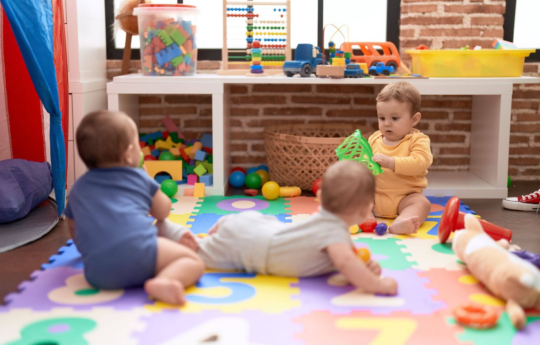
A passive approach to toddler childcare means the absence of structured activities and minimal interaction with the teacher. Children can spend time in a safe environment, but without stimulating cognitive learning. In such conditions, speech develops more slowly, and social skills are formed by chance. The educator acts as an observer, not a mentor. This creates a gap between the child’s potential and actual growth.
Why toddlers need guided learning
In early childhood, the brain actively forms neural connections through repetition and interaction. That is why toddler programs should include teacher-guided activities that help the child make sense of experience. When the teacher guides the process, the child learns language structures and behavioral patterns faster. Learning through play is most effective when it is guided by clear educational goals. Such approach combines a sense of freedom and exploration with enough structure to support meaningful skill learning within a balanced learning environment.
What Strong Toddler Programs Should Support
Many quality toddler programs focus on supporting different areas of growth, including physical, language, and social skills. They are not limited to one area, but cover physical, language and social aspects. At an early age, it is important to form a base that will support further learning in preschool. That is why the structure of the program should be well thought out, and the activities should be varied. Lack of balance leads to uneven development of abilities.
Gross motor skills
The progress of gross motor skills includes running, jumping, climbing and coordination of movements. These abilities are formed through regular physical activity, which should be part of the daily schedule. Young children learn to control the body and navigate in space. Motor activity also affects concentration and emotional state. Without this, the child may have difficulties with balance and coordination in the future.
Language development
Language in toddler programs depends on the quality of communication with adults. Children should hear words in context, not in isolation. The teacher stimulates dialogue, asks questions and encourages a response. This forms an active vocabulary and understanding of the structure of language. The more interaction, the faster speech develops.
Social confidence
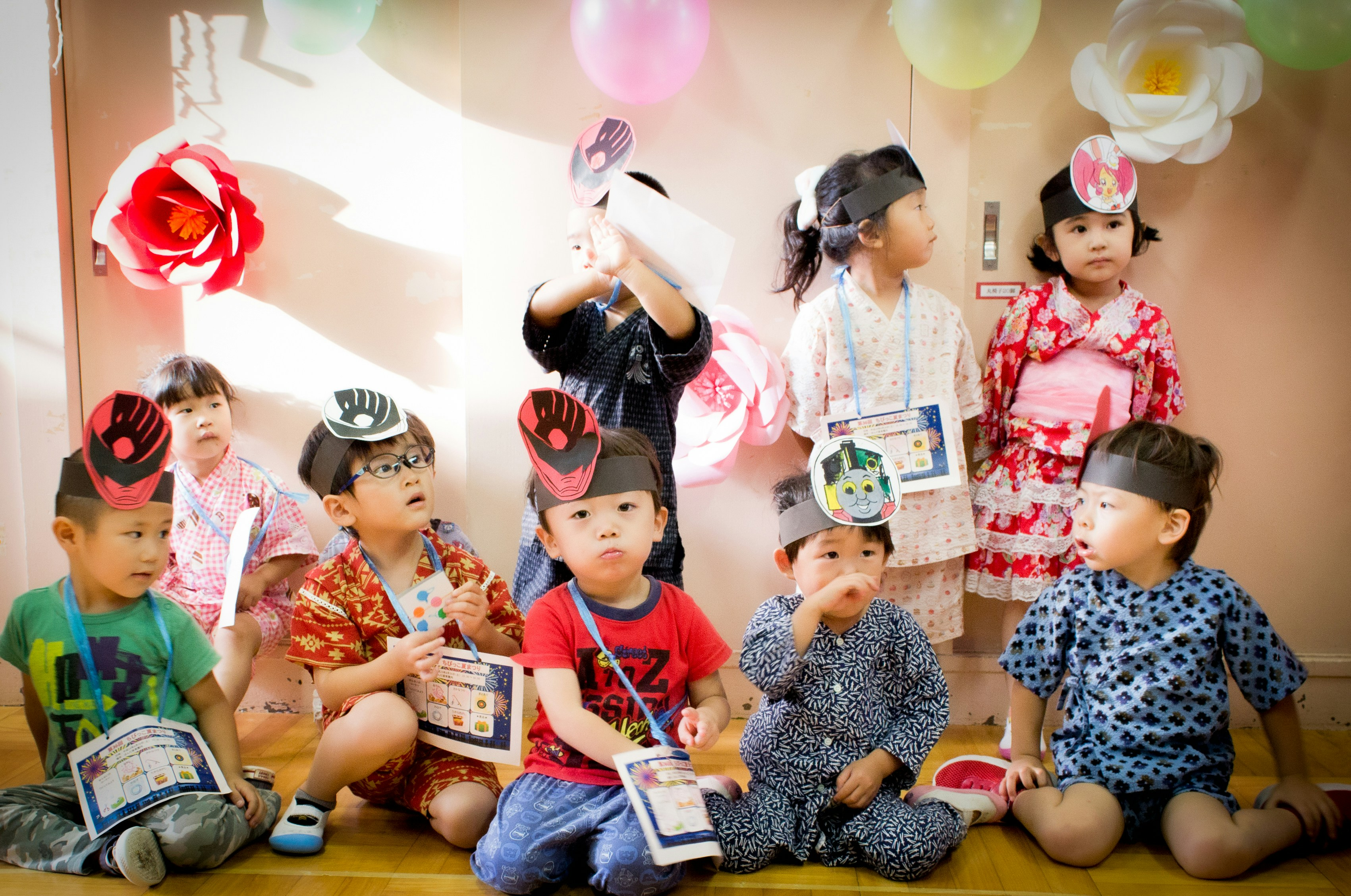
Social confidence is built through group interaction. Children learn to share, wait their turn, and respond to the emotions of others. In different programs, social situations are simulated daily. This allows the child to safely practice communication abilities.
What an Age-Appropriate Toddler Day Looks Like
The daily schedule in a quality toddler daycare has a clear structure that alternates activity and rest. An approach helps the child feel stable and predictable. The regime reduces stress levels and increases learning efficiency. In well-organized programs, each stage of the day has its own pedagogical goal. It will be a balance between play, learning and recovery.
Outdoor play
Outdoor play is an important part of the daily schedule, as it provides physical activity and sensory experience. Children interact with the natural environment, which stimulates the development of motor capabilities. Running, playing and moving in the fresh air support health and concentration. It also reduces emotional stress.
Classroom discovery
Discovery place in the classroom creates an environment for research and experimentation. Children work with materials that stimulate thinking. These can be constructors, sensory elements or simple logical tasks. The teacher supports the process, but does not control every action. In such a way, the learning will be interesting.
Rest and routine
Rest is a critical element of toddler programs. Children need time to recover from active activities. Sleep and silence help stabilize their emotional state. Regularity creates a sense of security. This also improves behavior and learning ability.
How Quality Programs Structure Toddler Learning
The organization of the learning process determines the effectiveness of a child’s growth. In a quality environment, learning does not occur chaotically, but according to a clear system. So, children can gradually master skills without overload. The program can be flexible but structured. This is exactly the approach used at Little Scholars NYC.
Daily rhythm
The daily rhythm can be built on the alternation of active and calm blocks. You can maintain a balance of energy throughout the day. Children quickly get used to a predictable schedule. Such a structure reduces anxiety and improves adaptation. Each stage of the day has a learning goal.
Teacher-guided exploration
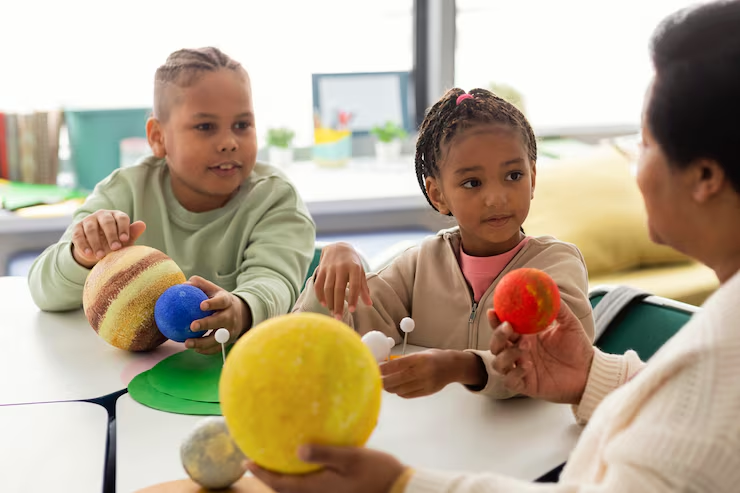
Teacher-guided exploration helps children learn new knowledge through interaction with the teacher. The teacher asks questions and directs the child’s thinking. Guided activities can complement free play by helping children engage more intentionally with new abilities.
Support for independence
The development of independence is an important part of early learning. Children learn to perform simple tasks independently. This includes self-service and choosing activities. The teacher supports the process, but does not replace the child.
Parent Checklist for Toddler Daycare Tours
Evaluating toddler childcare requires a careful analysis of the environment. It is important to evaluate not only information from the administration, but also the real behavior of children. Observation provides more data than a description of the program. Parents need to pay attention to details to avoid mistakes in choosing.
What to ask
Parents should ask specific questions about the structure of the program and teaching methods. This allows you to understand whether there is an educational component in the program. It is also important to clarify the issues of safety and qualifications of the staff. No less important is the approach to the progress of speech and motor capabilities. Clear questions give a real picture.
Examples of questions:
- What does a typical day look like for a child?
- What developmental milestones are supported?
- How is outdoor play organized?
- Are there teacher guided activities?
- How is social growth supported?
What to observe
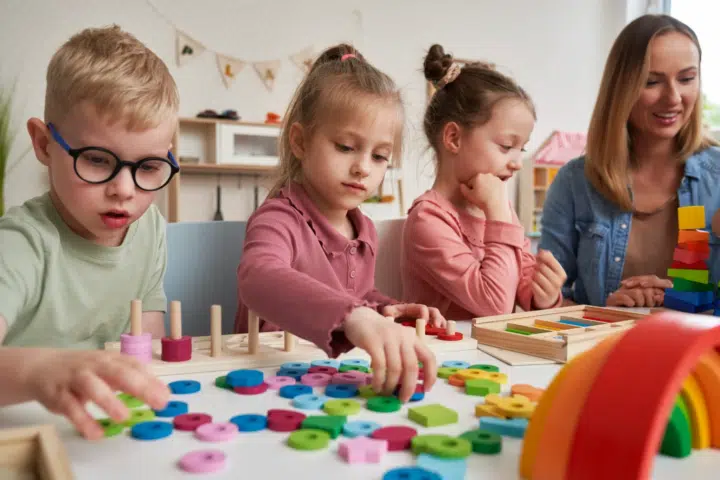
During the visit, it is important to assess the atmosphere of the group. Children should be engaged, not passive. Interaction between teachers and children should be lively and natural. The space should be organized logically. It is also important to pay attention to the noise level and the emotional state of the children.
Comparison Table: Passive Care vs Structured Toddler Programs
| Criterion | Informal care | Educational programs |
| Teacher Role | Observer | Active educator |
| Learning | Occasional/unstructured | Systematic and planned |
| Language Development | Minimal stimulation | Continuous engagement and support |
| Motor Skills | Inconsistent growth | Daily practice and reinforcement |
| Social Abilities | Develop naturally without guidance | Supported through guided interaction |
| Outcome | Basic care | Comprehensive learning |
Conclusion: Choosing Toddler Care With Developmental Value
Choosing toddler care involves more than location or convenience. The most important factor is how the environment supports communication, movement, and early social experiences in everyday routines. Little Scholars NYC’s approach demonstrates how to combine structure, play, and pedagogical purpose. So, children can develop consistently and naturally.
FAQ
What should a toddler daycare program teach?
Speech, gross motor skills, social abilities, and independence.
How can parents compare toddler childcare options?
Through the structure of the day, child involvement, and pedagogical approach.
What developmental milestones should toddler programs support?
Speech, gross motor skills, social interaction, and emotional regulation.
Why are gross motor capabilities important for toddlers?
They build physical coordination and confidence in movement.
How much structure should toddler daycare provide?
Balance between free play and guided learning activities.
What questions should parents ask during a toddler daycare tour?
About the program, safety, methods and daily schedule.
How can toddler daycare support independence?
Through daily tasks, independent decisions and support without excessive intervention.